




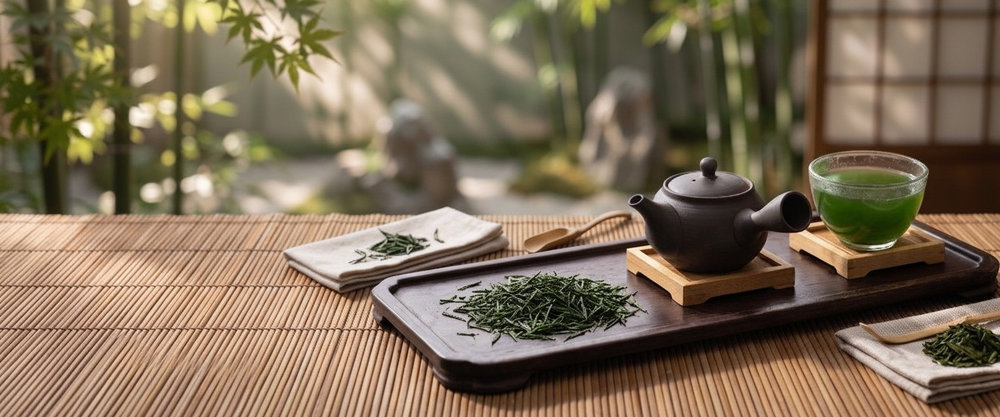

Among the vast variety of Japanese green teas, there is one sort that invariably evokes admiration even from the most experienced tasters. We are talking about gyokuro—an elite variety whose name poetically translates to “jade dew.” This tea is considered a true pride of the Japanese tradition due to its extremely complex cultivation process and absolutely unique flavor profile. If you are looking for new gastronomic experiences and want to understand what the famous Japanese umami is, getting to know this tea will be a true revelation for you.
What is Japanese gyokuro tea and what makes it special?
Gyokuro belongs to the category of premium shade-grown teas, which fundamentally distinguishes it from classic sencha grown under the open sun. The main feature of this variety lies in the specific preparation of the tea plantations long before the harvest begins. Approximately twenty days before farmers start picking the young leaves, the bushes are tightly covered with special nets or traditional bamboo mats. This is done to almost completely block direct sunlight from reaching the plant and to trigger entirely different biochemical reactions within it.
How does shading affect the chemical composition and flavor of gyokuro?
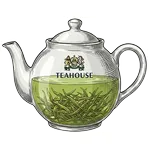
When a tea plant finds itself in dense shade, its development changes significantly. Due to an acute lack of sunlight, the photosynthesis process slows down, and consequently, the amino acid L-theanine does not convert into catechins, which usually give tea its pronounced astringency and bitterness. Instead, L-theanine accumulates in huge quantities, providing the future infusion with a thick, silky texture and a powerful natural sweetness. At the same time, the leaves acquire a rich, deep dark green color as they try to capture the remaining light, making the dry leaves visually stunning.
What does authentic shade-grown gyokuro tea taste like?
Tasting this variety often permanently overturns people’s ideas of what green tea can be. Its style differs radically from the usual meadow grassiness, offering instead a dense, almost broth-like flavor. In the cup, delicate marine nuances, notes of fresh seaweed, salted caramel, and a rich creamy sweetness on the long aftertaste are clearly traceable. The texture of the infusion turns out to be very buttery, thick, and viscous, leaving a lasting sensation of freshness after every sip.
How to properly brew gyokuro tea at home?
To reveal all the facets of this amazing variety, it is critically important to follow the correct temperature regime, which is significantly lower than standard recommendations. At TEAHOUSE, we often advise our guests: to get a perfectly sweet infusion and avoid ruining expensive leaves with bitterness, use water at a temperature no higher than 50–60 degrees Celsius. The proportion should also be unusually generous—it is advisable to take about 5–6 grams of dry leaves for a very small volume of water, approximately 60–80 milliliters. The first steeping lasts about two minutes, after which the infusion must be carefully poured into the teacups.
Why is it important to pour out the infusion to the last drop?
Japanese tea masters call the final drops of the infusion “golden” because they concentrate the highest amount of flavor compounds and aromatic oils. If you leave even a little water in the teapot, the leaves will continue to release catechins, and your next steeping is guaranteed to become unpleasantly bitter. Subsequent steepings should be done with slightly hotter water (about 60-65 degrees) and a much shorter extraction time—waiting 30-40 seconds will be enough. In general, high-quality shade-grown tea leaves perfectly withstand up to four or five full steepings.
FAQ: Frequently Asked Questions about Gyokuro Green Tea
- How is gyokuro different from matcha? Both of these teas are made from high-quality shade-grown raw materials, so they have a lot in common in their biochemical composition. However, for matcha, the raw material is ground into a fine powder, which we then completely drink along with the water. Gyokuro, on the other hand, is a classic loose-leaf tea that is brewed using the traditional extraction method, leaving the leaves in the teapot.
- Can you eat the tea leaves after brewing? Yes, this is one of the most interesting gastronomic features of high-quality Japanese shade-grown teas. After you have done all the possible steepings and the leaves have completely imparted their flavor to the water, they can be transferred to a small plate. Add a few drops of high-quality soy sauce or a drop of sesame oil, and you will get a healthy and very tasty vitamin-rich snack.
- How much caffeine does this variety of tea contain? Since the youngest spring shoots are harvested for its production, and they are also grown in the shade for a long time, the caffeine content here is quite high. However, thanks to the high concentration of L-theanine, this alkaloid is absorbed by the body very mildly, granting a state of deep and calm focus. We advise planning such tea sessions for the first half of the day so that you can have a sound and healthy sleep in the evening.