

How to Choose Bagged Tea: What to Look for Before Buying

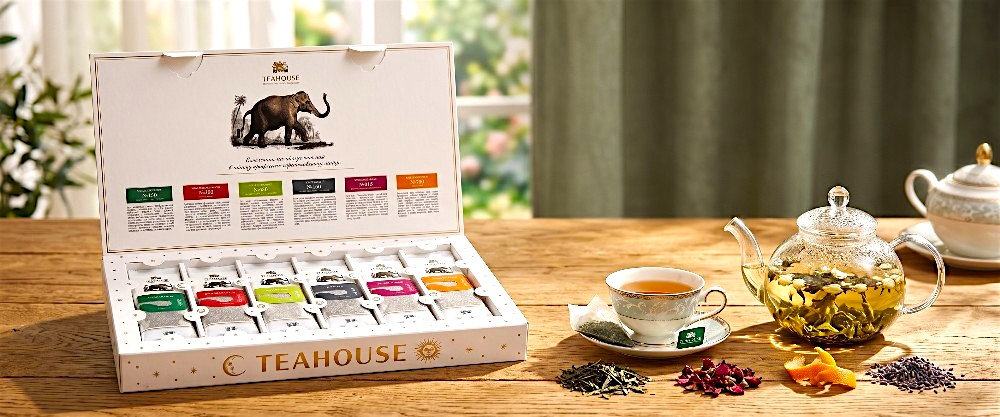
Today we’re going to talk about a phenomenon that often sparks heated debates among connoisseurs: portioned and bagged tea. A myth has firmly rooted itself in the tea community that this format is intended exclusively for being in a rush, completely devoid of depth and sophistication. However, it is worth casting aside these prejudices, taking a broader look at the issue, and understanding modern packaging technologies. High-quality bagged tea does exist, and it is capable of delivering wonderful taste experiences during every tasting. A striking example is our signature Perfect Cup line from TEAHOUSE, which was created specifically so that you can enjoy premium quality anywhere. Throughout this lecture, we will learn how to analyze store shelves, read the ingredients on labels, and unerringly choose a worthy product.
Why does bagged tea remain popular today?
The modern rhythm of life dictates its own harsh rules, which is why brewing speed often comes to the forefront for many people. The bagged format is genius in its absolute simplicity, allowing you to quickly get a cup of your favorite tea in the office, outdoors, or while traveling. However, this domestic convenience does not inevitably mean a loss of quality or an impoverishment of your morning cup’s flavor profile. Advanced manufacturers learned long ago how to meticulously pack good raw materials from the world’s best plantations into convenient portioned formats. The main task of every conscious consumer is to learn to clearly distinguish a truly good product from cheap mass-market options. If you master this useful skill, your quick office tea breaks will become just as pleasant as full-fledged home ceremonies.
How to correctly assess the visual quality of tea in bags?
The first rule of making a conscious choice is to carefully study the contents of the box itself. If you can only see fine gray dust through the material that leaves a dirty mark on your fingers, it is better to skip that option immediately. Quality tea in portioned form should consist of neatly chopped, yet visually recognizable tea leaves. It is precisely this fraction size that allows the leaves to instantly release their extractive substances into the hot water, creating a dense and very aromatic infusion. Therefore, when shopping, always pay attention to the transparency of the packaging material. Conscientious brands do not hide their product behind thick paper, allowing you to appreciate the beauty of the fraction even before the moment of purchase.
What material are safe tea bags made from?
The material into which the chopped leaves are packed plays a critically important role in forming an absolutely pure taste. The cheapest paper options are usually saturated with special solutions for strength, which later adds unpleasant cardboard notes to your flawless infusion. In contrast, conscientious masters use safe food-grade nylon mesh or eco-friendly materials based on natural starch. The TEAHOUSE company pays colossal attention to this aspect, which is why portioned teas of the Perfect Cup series are packed using modern safe technologies. Our material does not release any harmful compounds under the action of boiling water and allows you to enjoy exclusively pure taste every time.
Why is individual packaging of the bag so important?
The quality of portioned tea depends not only on the raw material but also on how well it is protected until the moment it enters your cup. Every bag in our line has a convenient signature tag and, most importantly, is securely hidden in an individual envelope. This is an extremely important nuance, as this personal packaging works like a safe for essential oils, protecting the tea from moisture, light, or foreign odors from the environment. Thanks to this well-thought-out solution, when you open a portion of our tea, you always get that same bright, fresh aroma as when working with a classic loose-leaf variety.
How to brew bagged tea for the best results?
Even the highest quality bagged variety requires a correct and careful approach to the temperature regime. Many people make the typical mistake of pouring boiling water over the cup and leaving the bag to float there for half an hour. For green varieties, always use water that has cooled down to at least eighty degrees to avoid the appearance of harsh bitterness. Dark varieties react much better to hot water, but the optimal steeping time usually should not exceed three minutes. Also, remember an important lifehack: never squeeze the remaining water from the bag against the side of the cup with a spoon. This aggressive action instantly releases an excess amount of tannins, making the taste bitter and harsh.
Frequently Asked Questions
Question: Why does tea in bags sometimes brew faster than classic loose-leaf tea?Answer: Such rapid extraction is due to the significantly smaller fraction size of the tea leaves in the portioned format. Small pieces of leaf have a much larger contact area with the water compared to a whole twisted leaf. That is why the finished infusion becomes strong and rich in literally a few minutes.
Question: How to correctly store bagged tea at home?Answer: It is best to keep portioned tea in its original box. Due to the fact that every bag in the Perfect Cup line has an individual envelope, it is already reliably protected from moisture and spice aromas. However, storing the box in a dry and dark place will help to maximally preserve the original sound of your tea.
Question: Can the same tea bag be brewed twice?Answer: The absolute majority of portioned formats are intended by the manufacturer exclusively for one full and quality extraction. During the first contact with hot water, the chopped leaves give off all their flavorful substances and valuable essential oils. Repeated use of the same bag will only give you slightly colored water without a distinct taste.
Чи була ця стаття корисною?
Ще немає оцінок — будьте першими.