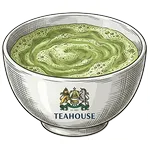
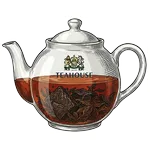
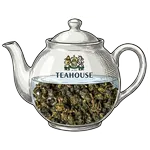
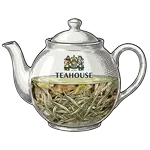






When people talk about tea using words like “warm,” “deep,” “soft,” or “cozy,” they aren’t referring to the temperature of the infusion. Instead, they are describing a specific sensory impression: hints of dried fruit, wood, baked grains, nuts, caramel, spices, or a sweet aftertaste appearing in the taste and aroma. Such associations arise particularly often in a cup of GABA tea, Shu Puerh, and dark oolongs, even though the reasons for the formation of this profile are completely different in each case.
And it is interesting here to look at tea not from the position of the finished product, but a bit earlier-at the stages of its production. After all, the “warm” profile is largely formed even before the leaf ever sees hot water. For GABA tea, conditions with a reduced supply of oxygen are important; for dark oolongs, the degree of oxidation and roasting; and for Shu Puerh, post-fermentation with the participation of microorganisms.
What does a “warm” taste profile of tea mean?
“Warm” is more of a convenient word for describing a complex of sensations rather than a strict professional term. When tea evokes associations with wood, baked bread, nuts, dried fruits, caramel, or mild spices, we intuitively perceive it as warm. In sensory analysis, such impressions are broken down into separate characteristics: aroma, sweetness, bitterness, astringency, aftertaste, texture, and other sensations in the oral cavity.
It is also important not to confuse a warm profile with simply a strong brew. A very concentrated green tea can be intense, astringent, and bitter, yet not seem “warm” at all. Conversely, a well-made dark tea can be moderate in intensity while leaving a long, soft, and rounded impression. That is why during a tasting, it is useful to ask yourself not only “how intense is it?” but also “what specific associations arise after the sip?”
Why can GABA tea have a soft and sweetish flavor?
The uniqueness of GABA tea begins right at production. To increase the content of γ-aminobutyric acid, fresh tea leaves are subjected to conditions of oxygen deprivation; studies show that under such stress, the pathways for GABA formation are activated in the leaf. In separate experiments, anaerobic processing yielded approximately a twenty-fold increase in GABA concentration compared to fresh leaves.
However, an important detail: GABA tea gets its character not solely from GABA itself. Anaerobic processing also alters other components of the leaf, including the levels of amino acids, polyphenols, caffeine, and theanine, so the sensory profile forms comprehensively. For this reason, GABA can be perceived as softer, sweeter, fruity, or honey-like-depending on the raw material and the specific technology, rather than because of any single substance.
If you want to better experience this feature, GABA is interestingly brewed using short infusions. You shouldn’t make a very strong brew right away: the first infusion can be used to get acquainted with the aroma, and subsequent ones to observe how sweetness, texture, and aftertaste change. Indeed, the dynamics of several infusions often give more information about a tea than a single very concentrated cup.
How does roasting form the “warm” notes of dark oolong?
In dark oolongs, roasting is one of the key factors. During this process, the composition of aromatic substances changes, which can enhance caramel, roasted, and other “warm” undertones. Studies of various oolongs show that roasted samples generally have more pronounced roasted and caramel notes, whereas unroasted ones more often demonstrate fresh and green nuances.
During heating, complex transformations of amino acids, sugars, and other leaf components take place. In particular, Maillard and caramelization reactions contribute to the formation of aromatic compounds associated with roasted, nutty, and caramel associations. At the same time, roasting can reduce the perception of bitterness and astringency while enhancing a sweet aftertaste, making the overall impression of the infusion more rounded.
That is why a dark oolong like TEAHOUSE Da Hong Pao (Big Red Robe) No. 210 is interesting to evaluate beyond just its initial note. Try waiting a few seconds after a sip and paying attention to what lingers in the mouth: does sweetness appear, does a slight dryness register, or does the aroma transition into woody, baked, or fruity associations? This tasting method clearly shows why the word “warm” often pertains specifically to the development of tea over time.
Why does Shu Puerh have an especially deep and rounded profile?
In Shu Puerh, the mechanism is completely different. Its uniqueness is linked to post-fermentation, during which the tea material undergoes so-called wet piling-a lengthy process involving elevated humidity and temperature where microorganisms and enzymatic transformations play a major role. As a result, the composition of polyphenols and other substances changes, and the taste gradually moves away from sharp astringency toward a softer, more rounded, and thick character.
Studies of Shu Puerh separately highlight the so-called “mellow and thick” taste characteristic. It is connected to the complex interaction of substances, among which polyphenol transformation products, polysaccharides, and theabrownins play important roles. During fermentation, microorganisms transform a significant portion of the tea leaf’s components, giving the finished tea an entirely different sensory structure.
This is precisely where speaking of a “warm” profile is especially appropriate. In a good Shu Puerh, it can manifest through woody, earthy, sweetish, dried fruit, or nutty associations, as well as through a rounded texture. Sensory studies of dark teas also describe woody, earthy, and aged aromatic notes that form as a result of fermentation processes.
How do the “warm” profiles of GABA, Shu Puerh, and Da Hong Pao differ?
At first glance, these teas might end up in the same category by impression-all seem soft, deep, and warming. However, upon closer inspection, the source of this feeling varies: for GABA, special anaerobic processing plays a major role; for dark oolongs, a combination of oolong technology and roasting; and for Shu Puerh, post-fermentation and microbial transformations. In other words, the exact same association of “warmth” can be born through three entirely different technological pathways.
For a practical comparison, you can take three TEAHOUSE teas: GABA Oolong No. 219 GABA, Da Hong Pao No. 210, and Classic Shu Puerh No. 308. If you brew them roughly in the same ware without making the infusions overly concentrated, it becomes interesting to observe not just “like/dislike,” but where the sense of depth comes from. This approach matches the expert experience of TEAHOUSE: comparing tea through raw materials, technology, and infusion development rather than isolated flavor descriptors.
How to brew GABA, dark oolong, and Shu Puerh to feel the difference?
For such a comparison, it is best not to use boiling water for the same duration across all three teas. GABA can be started with a moderate temperature and short infusions to avoid overwhelming its soft undertones with excessive concentration. Dark oolong is best brewed in a series of short pour-overs, gradually increasing the contact time with water, while Shu Puerh should be given the chance to fully open up after a brief initial rinse.
There is another simple trick: don’t rush to evaluate tea immediately after the sip. First pay attention to the aroma, then the initial taste sensation, next the texture, and finally what lingers after 10-20 seconds. In sensory description, precisely these differences between the start, development, and aftertaste help explain why two teas of equal strength can be perceived completely differently.
Why does “warm” tea often seem more intense?
A warm profile is easily confused with high intensity, but these concepts are not identical. Intensity speaks primarily to the strength or power of a sensation, whereas a “warm” profile describes the direction of sensory associations and how they combine with one another. This is why a light-concentration Shu Puerh can feel very rounded, while a heavily brewed green tea can feel sharp and astringent, even though the latter is perceptibly more intense.
Additionally, the aftertaste plays a major role. If a soft sweetness, woody, or nutty association lingers after a sip while astringency quickly fades, the brain often perceives this composition as cozier and “warmer.” In this sense, a warm profile is not a single specific note, but a combination of aroma, taste, texture, and aftertaste duration.
How to learn to recognize a “warm” profile in different teas?
Start with a very simple vocabulary. Instead of trying to name dozens of aromas right away, ask yourself: is the tea more fresh or baked, light or thick, dry or sweetish, floral or woody, short or long in the aftertaste? Such a system helps gradually transition from a general “the taste is kind of warm” to a more precise description of your own impression.
And comparison works best here. Brew GABA, Da Hong Pao, and Shu Puerh side by side, make two or three infusions of each, and write down three words after each sip. After a few such tastings, it becomes noticeable that the “warmth” in GABA might feel different from that in a roasted oolong or a Shu Puerh: in the first case it can be softer and sweeter, in the second roasted and caramel-like, and in the third thick, woody, and aged.
FAQ: what you need to know about the “warm” profile of tea?
- What is a “warm” taste of tea? This is a conditional description of a soft, deep profile featuring associations with wood, nuts, dried fruits, caramel, baked, or spicy undertones. It is a sensory impression rather than a single flavor compound.
- Why does GABA have a special character? Conditions of reduced oxygen access are applied to GABA, stimulating GABA accumulation and altering the leaf’s composition. It is the combination of these changes that shapes the final tea profile.
- Where do roasted notes come from in dark oolong? They are largely tied to roasting, during which new aromatic compounds form and substances affecting taste and aftertaste are modified.
- Why does Shu Puerh seem thicker and softer? During post-fermentation, microorganisms and enzymes alter the composition of the tea leaves, contributing to the formation of a soft, thick, and rounded flavor profile.
- Can a “warm” profile be experienced in regular home brewing? Yes. For this, it is best to use several short infusions and pay attention not only to the initial taste, but also to the aroma, texture, and aftertaste.