How Teaware Changes the Taste of Tea

Can the same tea taste different without changing the leaves, water temperature, or brewing time? Absolutely. The answer often lies not in the tea itself, but in the teaware. A teapot or gaiwan can highlight floral aromas, create a fuller infusion, soften astringency, or reveal the most delicate aromatic nuances hidden in the leaves.
For many people, a teapot is simply a vessel for brewing tea. In Chinese tea culture, however, teaware is chosen with great care. The material, shape, wall thickness, and even the volume of a brewing vessel influence how tea leaves interact with water, shaping the aroma, texture, and aftertaste of every infusion.
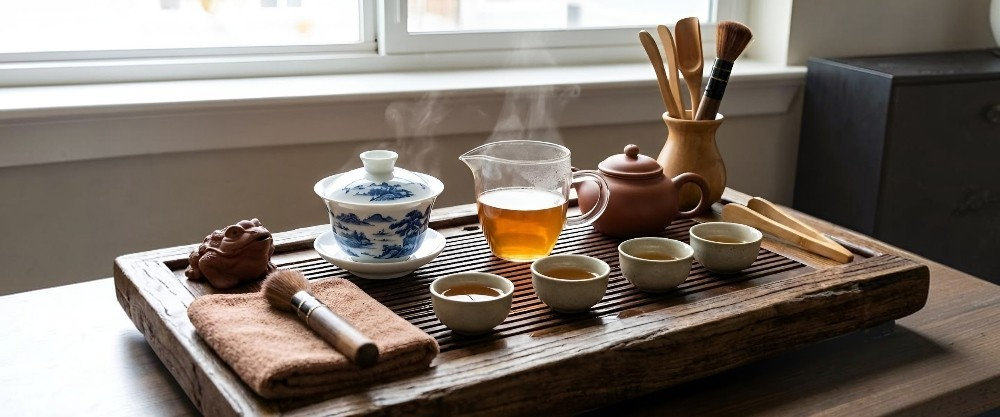
Try a simple experiment: brew the same tea in a gaiwan, a Yixing clay teapot, a glass teapot, and a ceramic teapot. You will experience four surprisingly different expressions of the same tea. Let’s explore why this happens and how different teaware helps reveal different sides of a tea.
Why Does the Same Tea Taste Different in Different Teaware?
When we talk about the taste of tea, we usually think about the cultivar, the growing region, or the water temperature. Yet the brewing vessel plays an equally important role in the brewing process. Different materials heat up and cool down at different speeds, retain heat differently, and create unique conditions for the tea leaves to unfurl.
As tea steeps, the leaves gradually release amino acids, polyphenols, essential oils, and natural aromatic compounds into the water. If the water stays hot for longer, the infusion becomes richer and more concentrated. If the temperature drops more quickly, the tea tends to preserve a lighter, fresher aromatic profile.
The shape of the brewing vessel matters just as much. A wide bowl gives the leaves plenty of room to fully expand, while a compact teapot creates a slightly more concentrated extraction. That is why the same tea can taste softer, sweeter, or noticeably more expressive depending on the teaware you choose.
How Does a Gaiwan Reveal the True Taste of Tea?
The gaiwan is often considered the most versatile brewing vessel for Chinese tea. It consists of only three parts – a bowl, a lid, and a saucer – yet it offers exceptional control over the brewing process. Porcelain does not absorb aromas and has almost no influence on the tea’s natural fragrance.
This is exactly why a gaiwan is ideal for discovering the authentic flavor profile of a tea. Green teas showcase the freshness of young leaves, lightly oxidized oolongs reveal floral and creamy notes, while white teas unfold honeyed and fruity nuances. Each infusion tells a slightly different story.
Another advantage of a gaiwan is how quickly the liquor can be poured out. This makes it easy to control the strength of each infusion and prevents the leaves from oversteeping. If you are tasting a tea for the first time, a gaiwan lets you appreciate its natural qualities without interference from the brewing vessel.
A simple tip often used during tea tastings is to lift the lid after the first infusion and inhale the aroma of the warm, wet leaves. Some of the most fascinating floral, fruity, and nutty notes appear there before they fully emerge in the cup.
Why Does a Yixing Teapot Create a Rounder Tea?
Yixing teapots are crafted from a unique Chinese clay with a naturally porous structure. Unlike porcelain, this clay gradually interacts with tea over time and absorbs aromatic compounds. That is why a Yixing teapot is traditionally dedicated to a single category of tea.
The clay retains heat exceptionally well, allowing the leaves to open slowly and evenly. The result is a fuller-bodied infusion with softened astringency and a smoother texture. This effect is especially noticeable with dark oolongs and ripe pu-erh teas, where woody, chocolate, caramel, and roasted notes become more harmonious.
Interestingly, a Yixing teapot seems to “grow together” with the tea brewed inside it. After years of brewing the same style of tea, the aroma becomes increasingly integrated and balanced. Many experienced tea lovers therefore keep separate Yixing teapots for oolong and pu-erh.
If you are just beginning your journey with Yixing clay, avoid brewing many different teas in the same pot. This helps preserve a clean flavor profile and makes it easier to appreciate the unique qualities of the clay itself.
How Does a Glass Teapot Change Green and White Tea?
A glass teapot offers one important advantage: complete neutrality. Glass does not absorb aromas, does not interact with tea leaves, and releases heat more quickly into the surrounding air. As a result, delicate teas are less likely to become overheated.
This makes glass especially suitable for green tea. Fresh spring teas can easily lose their elegance if the water stays too hot for too long. In a glass teapot, the aroma remains brighter and fresher, while the infusion tastes clean, light, and refreshing.
There is also an aesthetic dimension to brewing in glass. The transparent walls allow you to watch the leaves slowly unfold and dance through the water. For many tea lovers, this visual experience becomes an essential part of the tea ritual.
If you enjoy white teas with large buds or green teas with long, elegant leaves, a glass teapot lets you appreciate both the flavor and the beauty of the brewing process.
When Is a Ceramic Teapot the Best Choice?
A ceramic teapot sits comfortably between porcelain and Yixing clay. It retains heat well but does not absorb aromas as actively as porous clay. This makes it a practical choice for brewing different varieties of tea in the same vessel.
Tea brewed in ceramic often feels more balanced. The material softens sharper edges while keeping the aroma open and expressive. Black teas develop richer honey-like sweetness, dark oolongs become smoother, and aged white teas reveal a deeper, longer-lasting finish.
For everyday tea drinking, ceramic is wonderfully versatile. If you prefer having one reliable teapot for many different teas, it offers both practicality and a refined brewing experience.
How Should You Choose Teaware for Different Types of Tea?
There is no universal rule, but there are helpful guidelines for bringing out the best in different teas. Green teas are usually brewed in a gaiwan or a glass teapot to preserve their freshness, lightness, and natural sweetness. These vessels highlight the delicate aromatic nuances of young leaves.
White teas perform beautifully in a gaiwan, glass, or ceramic teapot. Choose a gaiwan when you want a brighter aromatic expression, or ceramic when you prefer a softer, calmer infusion.
Lightly oxidized oolongs shine in a gaiwan thanks to short, controlled infusions. Dark oolongs and ripe pu-erh benefit from the steady heat of Yixing clay or ceramic. Black teas can be equally enjoyable in either a gaiwan or a ceramic teapot, depending on whether you prefer a brighter aroma or a rounder, fuller infusion.
The most valuable advice is simple: do not be afraid to experiment. A single tea can offer several completely different tasting experiences simply by changing the brewing vessel.
How Can You Host a Tea Tasting at Home?
A home tea tasting is one of the most enjoyable ways to discover how teaware influences tea. You do not need professional equipment or advanced knowledge – just one tea and several different brewing vessels.
Use the same amount of tea leaves, the same water, the same temperature, and the same brewing time for each infusion. This way, the brewing vessel becomes the only variable, making the differences much easier to notice.
During the tasting, pay attention to more than just aroma. Notice the body of the infusion, its sweetness after swallowing, the level of astringency, the warmth in the cup, and the lingering finish. Some of the most exciting discoveries happen between the second and fourth infusions, when new layers of flavor begin to emerge.
Keeping simple tasting notes is also surprisingly helpful. After a few sessions, you will quickly discover which brewing vessel complements your favorite teas best.
Which Teaware Does TEAHOUSE Use?
At TEAHOUSE, porcelain gaiwans are most often used when tasting new teas. This approach allows each tea to be evaluated as objectively as possible because porcelain does not influence the aroma and reveals the tea’s natural expression.
The TEAHOUSE collection includes porcelain gaiwans in different sizes, including models of around 180 ml, which are especially convenient for preparing several successive infusions at home. This size works equally well for a quiet solo tea session or for sharing tea with two or three people.
If dark oolongs or ripe pu-erh teas are among your favorites, adding a ceramic or Yixing teapot to your tea collection is a natural next step. Each style of teaware helps unlock different qualities of the leaves.
Why Is It Worth Having More Than One Brewing Vessel?
One of the joys of tea culture is discovering how many different expressions a single tea can have. Simply changing the brewing vessel can produce a lighter, fuller, or more aromatic infusion without changing the tea itself.
There is no need to build a large collection all at once. Start with a versatile gaiwan, then gradually add a ceramic or Yixing teapot for the teas you drink most often. Over time, you will notice that each piece of teaware creates its own brewing style and reveals new dimensions of familiar teas.
The best way to experience this is through your own experiment: one tea, several brewing vessels, and a few mindful infusions. You may be surprised by how differently the same leaves can unfold.
FAQ
Does teaware really change the taste of tea?
Yes. The material, shape, and heat retention of a brewing vessel influence how tea leaves extract into the water, affecting aroma, body, sweetness, and aftertaste.
Which brewing vessel is best for green tea?
A porcelain gaiwan or a glass teapot is usually the best choice for green tea because both preserve its freshness, floral aromas, and natural sweetness.
Why is a Yixing teapot used for only one type of tea?
The porous clay gradually absorbs aromatic compounds from the tea. Brewing different teas in the same pot can mix those aromas over time.
Is a ceramic teapot suitable for everyday tea brewing?
Yes. Ceramic retains heat well, works beautifully with many different teas, and does not need to be dedicated to a single tea category.
What is the best teaware to start exploring Chinese tea?
A porcelain gaiwan of about 150-180 ml is an excellent place to start. It is versatile, easy to use, and reveals the natural flavor profile of a wide range of Chinese teas.
Чи була ця стаття корисною?
Ще немає оцінок — будьте першими.