





Yabukita: The Cultivar Shaping 70% of Japan’s Tea Plantations – and the Man Who Discovered It
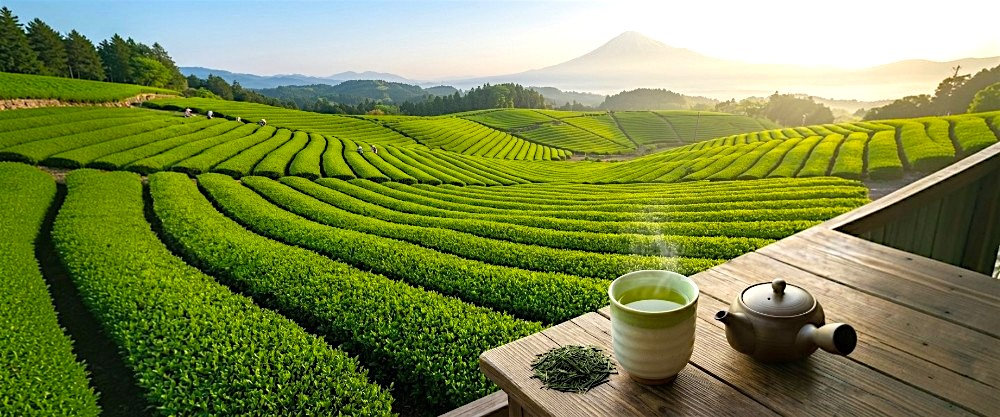
Imagine the endless green, perfectly manicured hills of Japan that so often delight the eye in tourist photographs. If you have ever had the opportunity to taste authentic Japanese green tea, there is a very high probability that it was Yabukita brewing in your bowl. It is important to understand that this is not some specific brand, but a genetically homogenous type of tea bush that today successfully grows on 70-75 percent of all tea plantations in this island nation. The history of this agronomic miracle rests on the dedication of just one person – an ordinary farmer from Shizuoka prefecture. During his life, his neighbors even teasingly nicknamed him “the ferret,” and, unfortunately, he did not live to see the moment when his personal discovery became the national standard.
What is a Cultivar and Why is it Confused with a Tea Variety?
First, let’s bring a brief clarity to the terminology so that we speak the same language and understand all the nuances of the process. In everyday life, we are used to saying “variety” [сорт], meaning green or black tea, sencha or matcha, but in reality, these are types determined solely by the processing method of the harvested leaf. A cultivar is a genetically identical type of plant, which closely resembles the situation in global viticulture. Remember the famous vines of Cabernet Sauvignon, Chardonnay, or Merlot – these are cultivars from which talented winemakers create wines that are completely different in style. Laws work exactly the same way in the art of tea: from a single Yabukita raw material bush, you can make delicate light sencha, thick fukamushi, or even classic black tea.
How Breeder Sugiyama Hikosaburo Changed the Tea Industry
The main character of our lecture today is Sugiyama Hikosaburo, a talented farmer-breeder, born in 1857 to the family of a wealthy sake brewery owner and a doctor of traditional Chinese medicine. Instead of continuing the profitable family business and living in comfort, he consciously chose hard physical labor on the land. As early as 1877, while working alongside master Yamada Fumisuke, the young researcher realized an idea that was almost revolutionary at the time: every individual tea bush has its own individual characteristics. For the next thirty years, this restless enthusiast traveled all over Japan, even reaching Okinawa and neighboring Korea in his expeditions. He sneaked through others’ fields in search of ideal plants and meticulously cataloged over a hundred specimens, for which local neighbors nicknamed him “itachi,” which translates as ferret. He made his most important discovery much later, in 1908 in the Suruga district, finding a bush near the northern part of a bamboo grove that yielded a more delicate and sweeter leaf due to less direct sunlight. This is how the name Yabukita was born, where “yabu” means grove, and “kita” means north in Japanese. This unique plant combined high yield, an early harvest period, resistance to mountain cold, a pleasant balance of taste, and the uniformity of the leaf, which is critically important for the industry.
Why Does the Cultivar Creator’s Tragic Story Still Astound Today?
Beautiful legends about ancient sages or wealthy masters of ceremonies are often told in the professional tea world, yet reality is significantly harsher. Sugiyama received funding for his own experimental field and a piece of land only at age 50, thanks to the unexpected support of patron Otani Kahei. The greatest blow of his life occurred in 1934, when the master turned 77 – the local council, through an administrative order, confiscated his land, completely destroying over twenty years of meticulous breeding work. The elderly breeder did not break under the weight of circumstances, continuing to work untiringly on the small leftover patch, but died in 1941 without seeing his recognition. The official registration of Yabukita took place only twelve years after his death, in 1953, and mass encouragement for cultivation started from 1955, after which an explosive growth in the popularity of this bush began.
What Types of Tea Are Made from Yabukita and How to Brew Them Correctly?
The true magic of this bush lies in its incredible versatility for producing completely different styles of brewing. From it, they create Sencha Asamushi, which undergoes brief steaming and yields a transparent fresh infusion, and Sencha Fukamushi with long steaming, which gives a thick, cloudy dark green tea. The elite shaded Gyokuro, which possesses a pronounced sweet umami taste thanks to the accumulation of L-theanine, is also made from the very same leaf, and even highly concentrated powdered Matcha. To reveal the deep multi-faceted profile of authentic Japanese sencha from our collection, the tea tasters of the TEAHOUSE company always advise strictly controlling the water temperature. For ideal tea drinking, heat the water no higher than 70-75 degrees Celsius. If you pour boiling water over this delicate green leaf, you will instantly lose the subtle freshness, getting sharp bitterness instead. Make the first steep short, approximately 40-50 seconds, and then you will be able to fully feel all the most delicate spring nuances in your bowl.
What Risks Does the Dominance of a Single Cultivar Hide in Japan?
Of course, other cultivars exist on the Japanese islands, such as the well-known Saemidori, Okumidori, Asatsuyu, Yuta Kaori, or Meiryoku, but their total share is less than 25% of all areas. The complete dominance of Yabukita creates a so-called monoculture, which forces the modern community of farmers to think seriously about ecological risks. If a specific disease or a new parasite suddenly appears, it could deliver a devastating blow to the entire country’s industry at once. That is why Japanese specialists have been trying to actively develop alternative bushes in recent years. Although Yabukita is now successfully grown in Taiwan, Kenya, certain zones of China, and even European Portugal, it has established itself exclusively in its homeland precisely as the foundation of the classic Japanese style.
Frequently Asked Questions about the Yabukita Cultivar
Who is the discoverer of the Yabukita cultivar? A Japanese farmer-breeder from Shizuoka, Sugiyama Hikosaburo, discovered this type of tea bush in 1908.
What does the word “Yabukita” mean? The name comes from the place where the best bush was found: “yabu” in Japanese means grove, and “kita” means north.
What market share does this bush hold in Japan? Today, Yabukita dominates the industry and grows on 70-75% of all tea plantations in Japan.
What types of Japanese tea are produced from Yabukita? Due to its versatility, it is successfully used to make sencha, hojicha, genmaicha, kabusecha, gyokuro, and the base for matcha (tencha).